
5 Lead Generation Horror Stories (And How to Revive Dead Leads)
If you’ve ever watched a hot lead go cold overnight, you know the feeling. The buyer seemed ready. The quote went out. Then nothing. No reply, no call back, no answer.
Most of these stories share a root cause. A step got skipped early in the sale, and the deal paid the price later. The good news is most dead leads aren’t gone for good. With the right follow-up, and a tighter process next time, a quiet pipeline comes back to life.
Horror Story #1: The Lead Who Ghosted
The buyer requested a quote, took your first call, and asked smart questions. Then the replies stopped.
What went wrong: The call ended without an agreed next step. With no plan for the next conversation, the buyer had no reason to respond and no clear way to say no.
How to revive the lead:
- Send a short, low-pressure message with one clear question
- Give the buyer permission to say no: “Sounds like the timing isn’t right. Should I close your file for now?”
- Try a new channel, like a phone call after two unanswered emails
Next time: End every call with an agreement on what happens next, who does what, and by when. Ask early: “If this isn’t a fit, are you comfortable telling me so?”
Horror Story #2: The Quote Sent Into the Void
You built a detailed quote, hit send, and waited. A week later, you still have no idea whether the buyer opened the file.
What went wrong: The quote went out before the buyer confirmed a real problem, a budget, and a decision process. A quote sent too early turns into free consulting. The buyer uses your numbers to shop around, or sets them aside.
How to revive the lead:
- Call instead of asking “did you get my email?”
- Ask what prompted the request and whether the problem still exists
- Ask what the buyer needs to make a decision, then agree on a date for a yes or no
Next time: Hold the quote until the buyer confirms the problem, the budget range, and who signs off. Then review the quote together on a call instead of sending a cold attachment.
Horror Story #3: The Budget Nobody Mentioned
The conversation went well until the final step. Then the buyer admitted the budget was half your lowest price.
What went wrong: Nobody asked about money until the end. Budget feels awkward to raise early, so many sales reps wait. The result is weeks spent on a deal with no path to close.
How to revive the lead:
- Ask what the problem costs the buyer today in lost time, money, or customers
- Ask when the next budget cycle starts and schedule a follow-up for the date
- Ask whether the buyer wants to revisit scope, instead of cutting your price on the spot
Next time: Raise budget early, right after the buyer describes the problem. A simple question works: “Projects like this usually run between X and Y. Is a range like this in play?” If the answer is no, both sides save time.
Horror Story #4: The Decision Maker Who Never Appeared
Your contact loved the pitch. The problem was your contact had no authority to sign. Weeks of calls went nowhere because the real buyer never joined the conversation.
What went wrong: The decision process stayed a mystery. Nobody asked who else weighs in, how the company buys, or what approvals stand between a yes and a signed order.
How to revive the lead:
- Ask your contact to walk you through how the company makes a purchase like this
- Ask who else needs to weigh in and what each person cares about
- Offer a short call with the decision maker instead of another round with your contact
Next time: Map the decision process in the first or second conversation. Ask who signs, who influences the choice, and what happened the last time the company bought something similar.
Horror Story #5: The Pipeline Graveyard
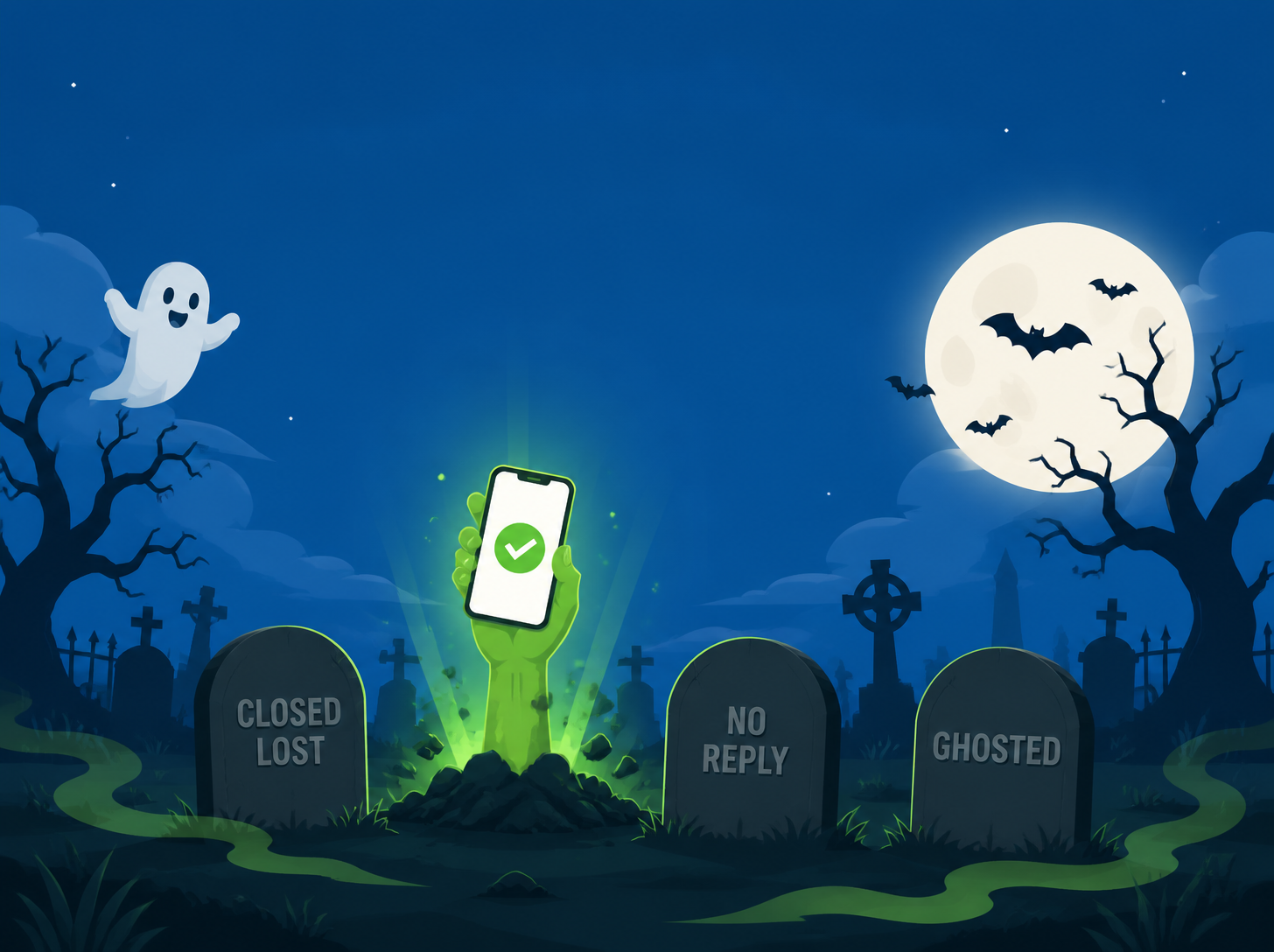
Every CRM has a graveyard. Old leads marked “closed lost” or “no response” pile up month after month, and nobody touches them again.
What went wrong: Too many deals ended with “let me think things over” instead of a clear yes or no. A stall feels safer than a no. A no frees your team to focus on buyers ready to move.
The upside: those contacts already know your company. Some have a new need, a new budget, or a new decision maker since the last conversation. Reaching out to a known contact takes far less effort than starting from zero with a stranger.
How to Wake the Dead Leads in Your Pipeline
A strong revival plan follows a few simple steps.
Sort Old Leads by the Missing Step
Pull every lead from the past 6 to 12 months marked lost, stalled, or unresponsive. Group them by where the sale broke down:
- No clear problem: the buyer never confirmed a real need
- No budget: the money didn’t match, or nobody asked
- No decision process: the decision maker never joined
- No next step: the conversation ended without an agreement
Pick Up Where the Sale Stopped
Each group needs a different first message. A buyer with no budget needs a question about timing. A buyer who never confirmed the problem needs a question about the problem. Skip the pitch and start with the step you missed.
Keep the First Touch Short
Two or three sentences work best. Remind the buyer who you are, reference the original need, and ask one simple question.
Make “No” a Good Answer
Some leads won’t come back, and a no is fine. Tell the buyer so, and follow through. After three or four touches with no response, close the lead out and focus on buyers ready to talk.
Stop Chasing Ghosts
Reviving old leads helps, but a healthy pipeline needs fresh buyers too. The strongest sales teams pair a disciplined process with a steady flow of new, high-intent leads.
Get Qualified Leads Daily
At 360Connect, we connect suppliers with real, high-intent buyers who are already looking for solutions. Instead of chasing leads who went quiet months ago, suppliers in our network receive qualified leads matched to their product, location, and industry.
Already checked demand in your area? Buyer demand shifts every season, so now is a good time to take another look.
Ready to grow?